

Divorce has a way of stripping life down to its studs. Routines disappear. Certainty wobbles. Confidence that once felt automatic suddenly feels conditional. For many men, the hardest part isn’t the paperwork or logistics—it’s the quiet realization that the version of life they were operating from no longer exists. That loss of identity can feel disorienting, especially when so much of adult male confidence is tied to stability and predictability. When those structures fall away, it can feel like starting from zero even when that isn’t actually true.
This moment, uncomfortable as it is, also offers something rare: a chance to rebuild with intention. Not with distraction or bravado, but with clarity. Confidence doesn’t come back through impulse decisions or external validation. It returns when men make thoughtful choices about their health, finances, and environment—choices that restore control piece by piece. Those choices don’t need to be dramatic; they need to be consistent and grounded.
This guide focuses on exactly that. Not shortcuts. Not stereotypes. Just practical ways to stabilize, improve, and move forward with purpose. The goal is to help men regain control without rushing the process or making decisions they’ll later regret. Stability, not spectacle, is what actually moves life forward after divorce.
1. Take Back Ownership of Your Physical Health

Divorce often accelerates self-awareness around appearance. Not because vanity suddenly matters more, but because confidence is closely tied to how we see ourselves when everything else feels uncertain. Physical changes that once felt manageable can feel amplified during this period. When identity is already shaken, even small shifts in appearance can feel like confirmation of loss rather than normal change. Recognizing this reaction is important, because it allows men to respond thoughtfully instead of emotionally.
Hair loss, in particular, can quietly undermine confidence after divorce. It’s not about youth or dating—it’s about recognizing yourself in the mirror. Consulting a male hair loss specialist can provide clarity on what’s actually happening and which options make sense long-term rather than reacting emotionally. Professional insight replaces anxiety with information, which alone can restore a sense of control. Knowing what is and isn’t within your control matters more than any cosmetic outcome.
Productive steps include:
-
Understanding whether hair changes are genetic, stress-related, or medical
-
Learning which treatments are proven versus marketing-driven
-
Setting realistic expectations for timelines and outcomes
Addressing physical concerns intentionally—rather than ignoring them or obsessing over them—creates a sense of agency. That agency matters more than the result itself. When men take responsibility for their health instead of avoiding it, confidence follows naturally. It becomes about stewardship of the body rather than fear of aging or comparison.
2. Rebuild Sexual Confidence Without Chasing Validation
Post-divorce confidence often gets confused with attention. Many men feel pressure to prove they’re still desirable, capable, or relevant. That pressure often comes from cultural messaging rather than genuine personal need. When self-worth becomes tied to validation, confidence becomes unstable and dependent on external feedback. That instability makes emotional recovery harder, not easier.
Reclaiming sexual confidence is about understanding what’s changed physically, emotionally, or psychologically—and responding with calm, informed decisions. For some men, exploring male enhancement options becomes part of that process, not as a reactionary move, but as a measured choice made privately and responsibly. The key distinction is intent: improvement versus compensation. When decisions are rooted in self-understanding, they tend to feel empowering rather than desperate.
Healthy rebuilding looks like:
-
Separating self-worth from performance anxiety
-
Understanding how stress and sleep affect intimacy
-
Seeking medical or professional guidance rather than experimenting blindly
The goal isn’t comparison or competition. It’s quiet confidence rooted in knowledge, comfort, and self-trust. That kind of confidence doesn’t fluctuate based on attention or outcomes. It allows men to approach intimacy with presence instead of pressure.
3. Get Hormones Checked Before Assuming It’s “Just Stress”

Fatigue, irritability, brain fog, and loss of motivation often get written off as emotional fallout from divorce. While stress absolutely plays a role, hormonal imbalance can amplify these symptoms and make recovery harder than it needs to be. When mental exhaustion persists, it often spills into every area of life, affecting work, relationships, and decision-making. Assuming it’s “just stress” can delay meaningful improvement.
Medical evaluation helps distinguish emotional exhaustion from physiological factors. Testosterone replacement therapy may be appropriate in some cases, but the key is testing—not guessing. Objective data removes uncertainty and prevents unnecessary interventions. It also gives men language for what they’re experiencing, which reduces frustration and self-blame.
Men benefit from:
-
Understanding baseline hormone levels
-
Recognizing how age and stress interact
-
Avoiding overcorrection or unregulated treatments
Restoring energy and mental clarity isn’t about chasing youth—it’s about restoring functionality so decision-making improves across every area of life. When the body functions better, resilience increases. That resilience becomes the foundation for rebuilding confidence and control.
4. Address Weight Changes Without Punishing Your Body
Weight changes are common during divorce, whether from disrupted routines, emotional eating, or loss of appetite. Many men respond with extremes—overtraining, restriction, or shame-driven habits that create burnout instead of progress. These approaches often mirror the emotional chaos of divorce rather than resolving it. Sustainable improvement requires stability, not punishment.
Medical support can offer a more sustainable path. A weight loss injection, when medically appropriate, can assist with appetite regulation and metabolic balance while healthier habits are rebuilt. This approach allows men to focus on consistency rather than constant self-control. It also reduces the mental load associated with weight management during an already demanding period.
Sustainable progress includes:
-
Rebuilding eating routines gradually
-
Prioritizing sleep and hydration
-
Supporting metabolism instead of fighting it
Weight management during divorce should stabilize the body, not create another battlefront. When physical health improves steadily, emotional resilience often follows. Progress becomes something that supports recovery instead of competing with it.
5. Restore Daily Confidence Through Preventive Self-Care
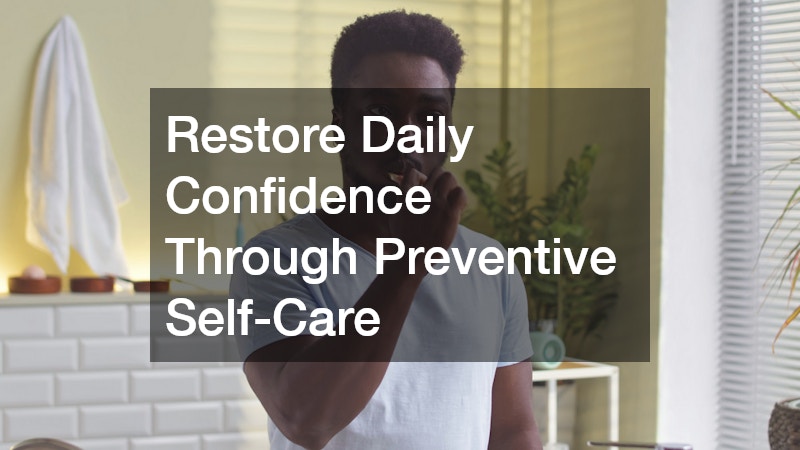
Divorce disrupts basic routines first. Appointments get postponed. Maintenance gets ignored. Over time, those neglected basics erode confidence in subtle but powerful ways. Men may not notice the shift immediately, but it accumulates quietly. The absence of routine can reinforce the feeling that life is out of control.
Returning to foundational self-care restores rhythm. Something as routine as visiting a dentist helps reestablish structure and self-respect. Oral health affects sleep quality, appearance, and even mood—yet it’s often overlooked during stress. Completing simple, responsible tasks reinforces the idea that life is still manageable.
Rebuilding basics reinforces:
-
Daily discipline and follow-through
-
Professional and social confidence
-
A sense of normalcy during transition
Small acts of consistency create momentum when bigger decisions feel overwhelming. These actions remind men that progress doesn’t always require dramatic change. Sometimes it starts with simply showing up for yourself again.
6. Create Accountability Around Health Goals
Motivation is unreliable during emotional recovery. Accountability, on the other hand, doesn’t depend on mood. Structured support systems help men regain consistency without relying on willpower alone. This matters because divorce often drains emotional energy that would otherwise fuel self-discipline.
Working with a weight loss clinic provides measurable benchmarks, professional oversight, and routine check-ins. This structure helps prevent the cycle of starting strong, burning out, and quitting entirely. External accountability also reduces decision fatigue, which is common after divorce.
Effective accountability includes:
-
Objective progress tracking
-
Adjustments based on real data
-
External support during low-motivation periods
Health goals succeed when they’re systematized, not self-policed. Systems create momentum even on difficult days. That momentum builds confidence gradually and sustainably.
7. Protect Your Financial Future Before Emotions Drive Decisions

Financial decisions made during divorce often carry long-term consequences. Emotional exhaustion, guilt, or urgency can push men into agreements they later regret. These decisions are rarely reversible and can affect decades of financial stability. Taking a pause before finalizing choices is often the most responsible move.
Early guidance from high asset divorce attorneys helps establish clarity before mistakes become permanent. Protecting assets isn’t about aggression—it’s about informed decision-making during a vulnerable time. Legal clarity reduces anxiety and replaces fear with understanding.
Critical considerations include:
-
Understanding total asset exposure
-
Evaluating long-term financial impact
-
Avoiding rushed settlements for short-term relief
Financial stability after divorce restores confidence faster than any purchase or distraction. It provides a foundation for rebuilding life intentionally. Knowing where you stand financially allows you to plan instead of react.
8. Use a Physical Move to Mark a Psychological Reset
Environment matters. Remaining in a shared or emotionally charged space can stall recovery and keep men anchored to a chapter that’s already closed. Physical surroundings influence mood more than many people realize. A new environment can signal a new phase mentally as well as practically.
Using a professional moving service reduces friction during an already stressful transition and allows the move to function as a clean reset rather than another source of chaos. Minimizing logistical stress preserves emotional energy for more important decisions. The move becomes intentional instead of overwhelming.
A purposeful move supports:
-
Emotional closure
-
New routines and boundaries
-
Mental separation from the past
Changing location isn’t escape—it’s reorientation. It creates space for new habits and perspectives to take root. That shift can be profoundly stabilizing during recovery.
9. Lock In Long-Term Stability While You’re Clear-Headed
Divorce changes legal realities overnight. Documents that once made sense may now be outdated or even risky if left unchanged. Ignoring these changes can create complications later, especially when emotions have settled and urgency has faded. Acting while clarity is present is often the safest approach.
Updating estate planning ensures that intentions reflect current circumstances. This isn’t pessimistic—it’s responsible. Clear documentation protects loved ones, assets, and future decisions. It also removes uncertainty, which can otherwise linger in the background.
Key steps often include:
-
Revising beneficiaries
-
Updating powers of attorney
-
Aligning plans with new priorities
Long-term stability is built by handling uncomfortable details proactively. These actions create peace of mind that supports emotional recovery. Knowing things are in order reduces background stress.
10. Redefine Success Through Intentional Living
Post-divorce success often gets framed as excess—bigger homes, flashier purchases, louder lifestyles. But confidence rooted in spectacle fades quickly. When choices are made for appearance rather than function, satisfaction rarely follows. Redefining success becomes essential for long-term fulfillment.
Working with a luxury home builder allows men to redefine success around function, comfort, and long-term satisfaction rather than impression management. A thoughtfully designed space supports routines, health, and focus. It becomes a tool for stability rather than a symbol.
Intentional living emphasizes:
-
Quality over quantity
-
Space designed for daily routines
-
Investment aligned with future goals
A well-designed environment reinforces control every day—not just when it’s being noticed or admired. It shapes how you move through your mornings, how you decompress at night, and how easily you maintain routines that support your health and focus. Instead of serving as a reminder of what was lost, it becomes a practical foundation for what you’re building next. That kind of alignment removes friction from daily life, and when your space works with you rather than against you, confidence stops being fragile and becomes genuinely sustainable.
Surviving divorce isn’t about proving anything to anyone else. It’s not about demonstrating resilience on social media, outperforming expectations, or signaling that you’re “fine” before you actually are. It’s about reclaiming control where it truly matters—your health, your finances, your environment, and your ability to make clear, intentional decisions without outside pressure. Confidence rebuilt this way doesn’t rely on attention, approval, or distraction to stay intact. It becomes steady, internal, and self-directed, even when circumstances shift.
Men who move forward thoughtfully don’t rush the process or try to outrun discomfort. They understand that recovery isn’t linear and that quick fixes often create long-term consequences. Instead of chasing distractions or external validation, they invest in clarity, structure, and long-term stability. Those investments may not feel dramatic in the moment, but over time they compound—reshaping daily life, strengthening decision-making, and restoring a sense of personal authority that feels earned rather than borrowed.
Control isn’t reclaimed through noise, excess, or spectacle. It doesn’t come from impulsive reinvention or proving that nothing affected you. It’s rebuilt through consistent, grounded choices that align with who you are now and who you intend to become next. When those choices stack up, confidence stops being something you chase and starts being something you live with—quietly, steadily, and on your own terms.
